
What does it take to build a digital business that lasts nearly three decades, survives four massive economic downturns, and successfully competes against multi-billion-dollar giants like LinkedIn?
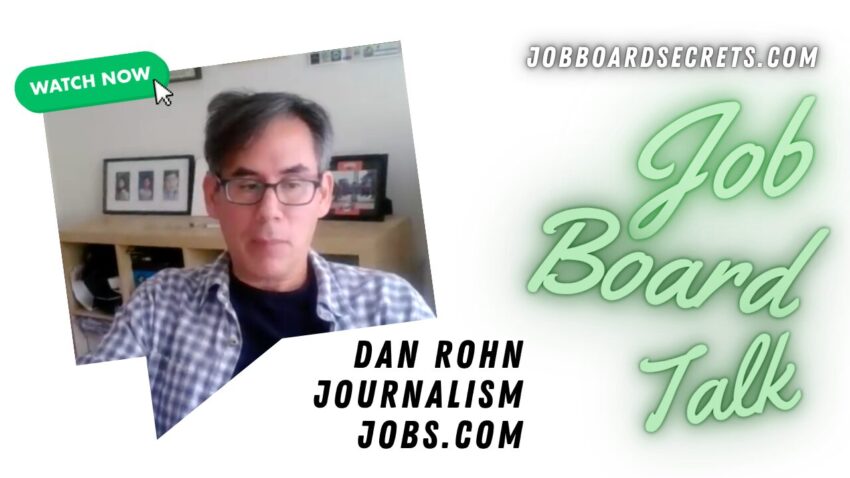
In a recent episode of JobBoard Talk, I sat down with Dan Rohn, the founder of JournalismJobs.com. Self-described as a “quiet founder” who prefers staying out of the limelight , Dan opened up about his 27-year entrepreneurial journey, sharing masterclass-level insights on staying lean, building community, and leveraging your niche advantage.
Here are the key takeaways from Dan’s job board journey.
🚀 From a Napkin Sketch to a Digital Pioneer
Before he was a tech entrepreneur, Dan was a business reporter and editor at the Washington Post, later moving to America Online (AOL). Despite the allure of tech stock options, the entrepreneurial itch won.
In August 1998, noticing that the domain name journalismjobs.com was up for grabs, he snatched it up. On April 21, 1999—coincidentally the anniversary of the day he met his wife—the site officially went live.
At the time, print media had a total monopoly on help-wanted ads. Dan’s strategy was beautifully simple:
- Buy copies of the dominant trade magazine.
- Cold-call the employers listing ads in the back.
- Offer them a digital alternative.
Initially launching as a free service to build traction , Dan began charging a modest $40 per job ad in November 1999—massively undercutting print ads that cost hundreds of dollars. Within two months, the site recouped its initial costs and became purely profitable.
📉 Weathering the Economic Storms
The job board industry is notoriously cyclical, heavily tracking the health of the broader economy. Dan’s 27-year run is a testament to resilience, having survived:
- The Dot-Com Bust & 9/11
- The 2008 Great Recession
- The COVID-19 Pandemic
“When you have a 90% profit margin, the IRS loves you… but staying lean has been the model all along.” — Dan Rohn
Dan’s secret weapon for surviving market crashes wasn’t a massive war chest; it was an incredibly low overhead. By operating entirely out of a home office, utilizing basic hosting, and avoiding extravagant corporate expenses, Dan ensured his business was bulletproof. When the 2008 banking crisis slashed his revenue by 30%, his margins were so high that the downturn was merely “less cake,” never a threat to survival.
⚔️ Quality over Quantity: Defeating LinkedIn at its Own Game
One of the biggest anxieties for modern niche job board owners is the dominance of platforms like LinkedIn. Yet, Dan views the $18 billion giant not as a death sentence, but as a competitor with a glaring weakness: quantity over quality.
Dan points out that when employers use massive corporate aggregators, they are often flooded with mismatched, unread resumes from unqualified candidates. In contrast, a highly targeted niche board like JournalismJobs.com serves a dedicated community. Employers get verified, high-quality candidates who are ready to hit the ground running.
How to use LinkedIn against itself:
Dan advises niche founders to stop fearing the platform and start leveraging it.
- Build active company pages on LinkedIn to funnel corporate users into your niche community.
- Use it for daily lead generation by tracking down recruiters who are openly complaining about candidate quality on their public feeds.
🏆 Freedom is the Ultimate Exit Plan
Perhaps the most refreshing part of Dan’s story is his definition of success. Over the years, three publicly traded companies have tried to buy JournalismJobs.com. Dan turned them all down.
Why? Because he valued his freedom and his community over a corporate buyout. The site has generated enough passive income to fully pay off a beautiful home, completely fund college for his three children, and afford him the flexibility to never miss a school drop-off or a family milestone.
“I’m a glorified middleman, just a matchmaker,” Dan smiles. “I’ve really had the best of both worlds—a very high-paying job, as well as flexibility. I just feel so lucky.”
💡 Final Thoughts for Entrepreneurs
Dan’s 27-year journey proves that you don’t need a massive staff, VC funding, or an aggressive corporate lifestyle to build a highly profitable tech empire. By finding a solid niche, keeping your expenses near zero, and fiercely protecting your community, you can build a business that supports your life—not a life that supports your business.