
The Origin Story: Solving a Real Problem
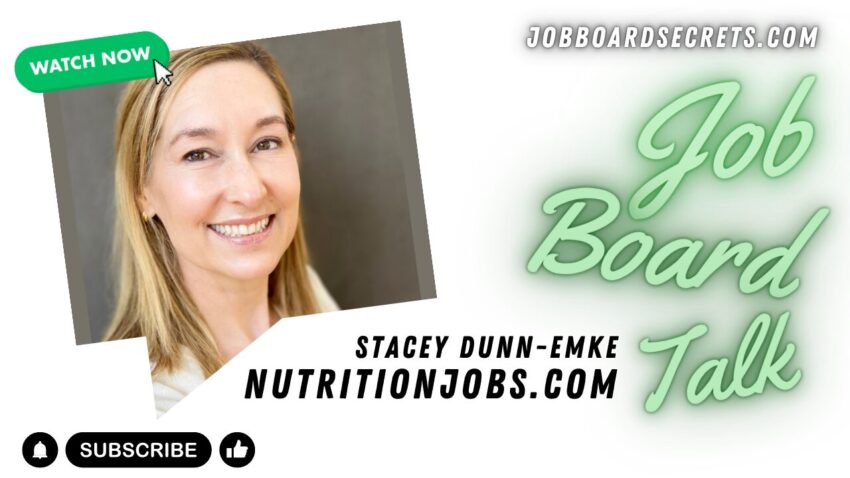
Stacey Dunn-Emke started nutritionjobs.com back in 2000 out of pure necessity. As a clinical dietitian looking for a new position, she discovered that major job boards like Monster.com and CareerBuilder had virtually no dietitian-specific openings. Rather than accept this gap in the market, she taught herself HTML, studied how other job boards worked, and built the platform herself.
This origin story perfectly illustrates a key principle: the best job boards solve real problems for real people. Stacey identified a vulnerable population (job seekers in a niche field) and created a dedicated space to serve them.
The Numbers: Modest but Sustainable
Today, nutritionjobs.com operates at a comfortable scale:
- 40,000 monthly sessions via Google Analytics
- Nearly 1,000 active job postings at any given time
- 14,000 email subscribers with a 40-45% open rate (well above industry average)
- 8,000 LinkedIn newsletter followers
- Six-figure annual revenue
The platform runs on Job Board IO, which Stacey transitioned to in 2017 to reduce development costs and time spent managing technical infrastructure.
The Two-Sided Marketplace: Balance is Everything
Like all job boards, nutritionjobs.com serves two distinct audiences:
For Job Seekers: Stacey keeps services mostly free, offering:
- LinkedIn profile optimization guidance
- ATS-friendly resume advice
- Salary negotiation education
- Digital courses via Teachable
- Weekly newsletter with authentic, personal voice
- Anonymous salary database (dietitiansalaries.com)
For Employers: The paid model includes:
- $95 for basic job posting
- $225 for featured jobs with social boost
- $450 for 30-day unlimited job postings (highest revenue driver)
Less than 10% of revenue comes from job seekers—Stacey intentionally keeps it that way, remembering her own frustration as a job seeker who couldn’t afford expensive newsletters.
The Power of Authenticity and Personal Branding
One of Stacey’s most valuable insights came from embracing her own identity as the face of the brand. She initially tried to stay invisible, thinking it seemed more “professional,” but discovered the opposite: people do business with people, not corporations.
Her newsletter transformation illustrates this perfectly. When she shifted from generic job-search content to including personal anecdotes and authentic voice, her open rates skyrocketed from 10-15% to 40-45%. This authenticity became a differentiator in a crowded digital space.
The Niche Advantage: Quality Control and Expertise
Being a niche player provides unique advantages:
Personal Vetting: Stacey can personally review suspicious job postings. When a defense contractor unexpectedly posted a dietitian role, she investigated and confirmed legitimacy rather than automatically approving it.
Industry Advocacy: She educates employers about realistic salary expectations, pushing back on listings offering $20/hour for positions requiring six years of education.
Spam Reduction: Paid postings naturally filter out most spam. Job Board IO’s IP and country blocking features help further.
Deep Audience Understanding: Stacey knows her dietitian community intimately—what they need, where they want to work, what salaries are realistic.
Marketing Strategy: Own Your Channels
Stacey’s multi-channel approach demonstrates the importance of diversification:
- Email newsletter (weekly, high engagement)
- LinkedIn (14,000 subscribers, organic reach)
- YouTube (called her “podcast”—a playlist of career content)
- Conference presence and local speaking engagements
- Affiliate partnerships with digital products
This isn’t random activity—it’s strategic content marketing that builds authority and drives organic traffic.
The Biggest Challenge: Sales
Despite running a successful business, Stacey identifies sales as her persistent challenge. She loves marketing and connecting with her community but struggles with proactive employer outreach. Her current approach relies on:
- LinkedIn networking
- Conference connections
- Newsletter sponsorship opportunities
- Organic word-of-mouth
She acknowledges needing to either invest more time in active sales or hire dedicated sales personnel.
Transitioning from Custom to SaaS Platform
In 2015-2016, Stacey realized she was spending a disproportionate amount on developer costs while spending enormous time articulating feature requests. The shift to Job Board IO meant trading some control for significant time and cost savings—a tradeoff she describes as “gold.”
Key lesson: Know when to stop building and start leveraging existing platforms. For most niche job board owners, custom development isn’t the bottleneck—sales and marketing are.
Advice for New Job Board Owners
Stacey offers three critical pieces of advice:
- Serve vulnerable populations with compassion. Job seekers are often in difficult situations. Build with empathy.
- Make the recruiter experience efficient. Tools like XML feeds reduce friction and save overworked recruiters precious time.
- Understand both sides of your marketplace. Success requires balancing job seeker needs with employer needs—they’re equally important.
Bottom Line
Stacey’s 25-year journey with nutritionjobs.com proves that niche job boards can be sustainable, six-figure businesses without requiring venture capital or rapid scaling. The keys are:
- ✅ Solve a real problem for a specific community
- ✅ Balance employer revenue with job seeker value
- ✅ Be the authentic face of your brand
- ✅ Leverage existing platforms to focus on business development
- ✅ Master marketing while building a strong sales process
- ✅ Deeply understand your niche
In an age of AI and automation, the human element—authenticity, expertise, and genuine care for your community—remains the most defensible competitive advantage.